11
11
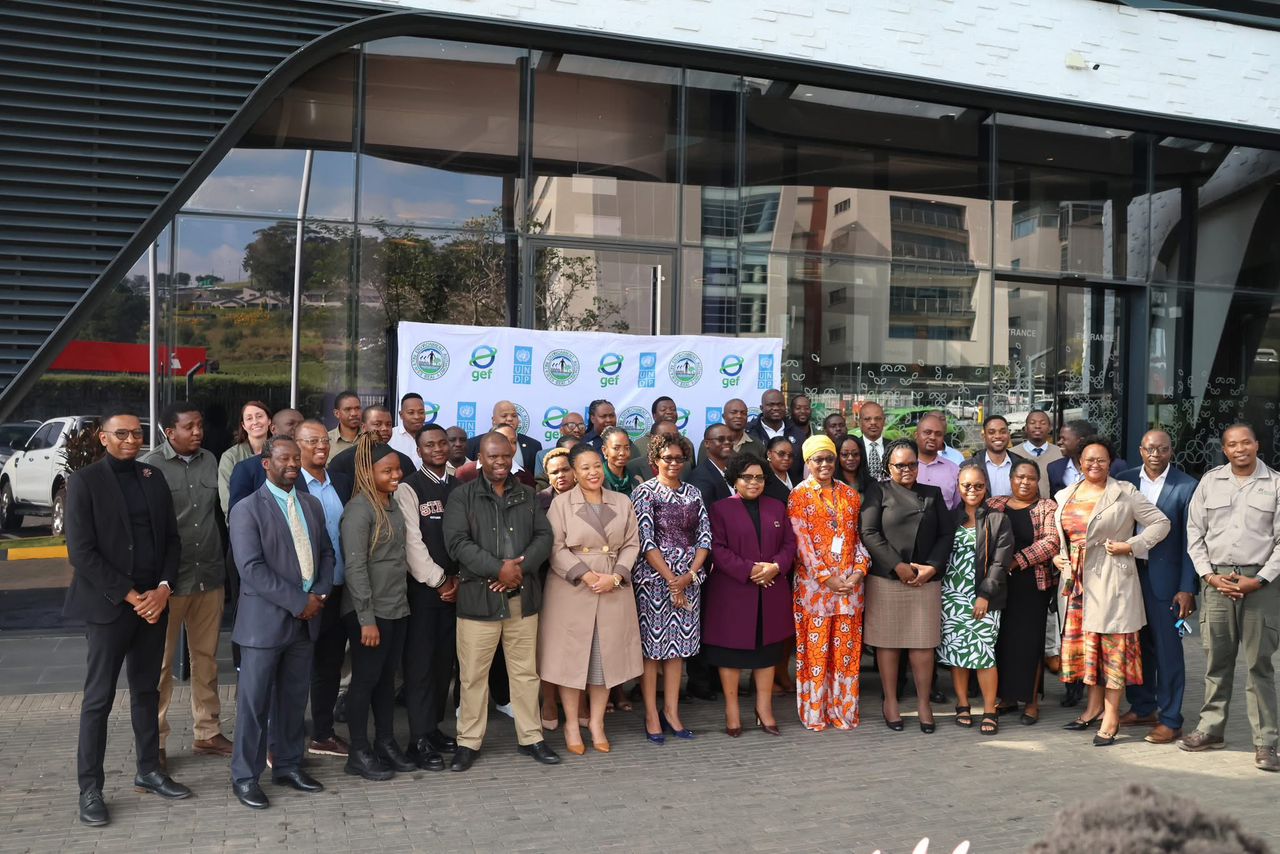
Eswatini took a defining step in its conservation history on May 25, 2026, with the official launch of the Establishment of the Eswatini Big Five Nature Reserve Project at the Hilton Garden Inn in Mbabane. The high-level Stakeholder Inception and Consultation Workshop brought together government officials, United Nations officials, conservation leaders, community representatives, traditional leaders, and private sector partners, all united behind a shared vision, to make Eswatini a continental model of wildlife conservation and community-centred tourism.
The Big Five Nature Reserve will span approximately 87,000 hectares across the Lubombo Region, consolidating protected areas and community landscapes to create connected habitat corridors for the Kingdom’s iconic species, elephant, rhino, buffalo, lion, and leopard.
A Multi-Million Dollar Investment in Eswatini’s Future
The project represents a total investment of more than USD 48 million, equivalent to approximately E805 million, to be implemented over the next five years. It is anchored by a direct grant of USD 5,232,261 from the Global Environment Facility (GEF), which has in turn leveraged over USD 43.5 million in co-financing from the Government of Eswatini, UNDP, Big Game Parks, Mbuluzi Game Reserve, the Eswatini National Trust Commission (ENTC), the Royal Eswatini Sugar Corporation (RESC), and the African Wildlife Foundation, among other partners.
Speaking at the workshop, Minister of Tourism and Environmental Affairs Jane Mkhonta-Simelane described the investment as a landmark signal of confidence in the Kingdom.

“This level of co-investment sends a very strong message,” she said. “It demonstrates confidence in Eswatini’s conservation vision, national ownership, and the recognition that conservation is not a cost to development, but a strategic investment into the country’s future resilience and prosperity.”
The project was endorsed by the GEF at the end of 2025, a recognition, as UNDP Deputy Resident Representative Nessie Golakai-Gould noted, of both the global ecological significance of the Lubombo landscape and Eswatini’s commitment to sustainable development.
Conservation Meets Community: The Lubombo Landscape
The project area forms part of the Lubombo Transfrontier Conservation Area and the UNESCO-recognised Lubombo Biosphere Reserve, a landscape of global biodiversity significance. Yet the same terrain faces mounting pressures, including ecosystem degradation, invasive alien species, habitat fragmentation, climate stress, and the socio-economic challenges of communities living adjacent to protected areas.
Central to the project’s design is the acknowledgement that conservation cannot succeed without communities. Human-wildlife conflict, including livestock losses, crop destruction, and competition for grazing land, has long strained the relationship between conservation institutions and rural households in the region.
“Conservation efforts cannot succeed sustainably if communities do not experience meaningful and tangible benefits from wildlife and protected landscapes,” Golakai-Gould said in her address. “This is why the project places strong emphasis on coexistence, inclusive governance, sustainable rangeland management, benefit-sharing, alternative livelihoods, and expanding participation in the wildlife economy.”

The project is expected to improve livelihoods for approximately 18,800 beneficiaries, with a deliberate focus on women, youth, and socially marginalised groups.
Eswatini’s Place in the Global Conservation Architecture
Also addressing the workshop was GEF Operational Focal Point Constance Dlamini of the Ministry of Tourism and Environmental Affairs, who situated the Big Five project within the broader international financing framework.
The Big Five National Project is a child project under the Wildlife Conservation for Development Integrated Programme (WCD-IP), approved under the eighth replenishment cycle of the GEF. Eswatini strategically channelled its GEF-8 STAR allocations for Biodiversity and Climate Change into this Integrated Programme, an approach that effectively stretched the Kingdom’s investment, for every three dollars invested, the GEF contributed an additional dollar.
“Programming through the Integrated Programmes helped us to stretch our investment,” Dlamini noted. “This was a brilliant move for us, since our STAR allocation is relatively the lowest in the region.”

The project also aligns with Eswatini’s commitments under the Sustainable Development Goals, the Convention on Biological Diversity, and the Kunming-Montreal Global Biodiversity Framework, as well as the recently launched United Nations Sustainable Development Cooperation Framework (UNSDCF).
By the Numbers: Global Environmental Impact
From a GEF reporting perspective, the project is expected to deliver measurable global environmental outcomes, including the improved management of approximately 87,100 hectares of connected landscapes, the creation of 15,600 hectares of new terrestrial protected areas, restoration and improved biodiversity management across 32,200 hectares, and the strengthened recovery of key wildlife populations across the Lubombo corridor.
Gender responsiveness is embedded throughout the project design. More than 827 community members were consulted during project preparation, with women representing 55 percent of participants. Governance systems, benefit-sharing arrangements, livelihood programmes, and approaches to human-wildlife conflict management are all designed to be gender-inclusive.
Positioning Eswatini as a Conservation Leader
For the tourism sector, the Big Five project carries enormous strategic significance. Minister Mkhonta-Simelane outlined two primary outcomes the project is designed to deliver: promoting sustainable and inclusive economic growth through conservation-linked job creation and enterprise development, and strengthening natural resource management through a resilient, low-carbon development pathway.
Golakai-Gould was equally direct about the prize on offer.
“If we get this right, the wins for Eswatini are enormous,” she said. “This project has the potential to position Eswatini as a leader in integrated conservation, a model for human-wildlife coexistence, a stronger eco-tourism destination, and an example of how biodiversity conservation can support inclusive economic transformation.”
With the Inception Workshop now concluded and implementation formally underway, the Eswatini Big Five Nature Reserve Project enters a critical five-year phase. The eyes of the region, and of the global conservation community, are now on the Lubombo.