11
11
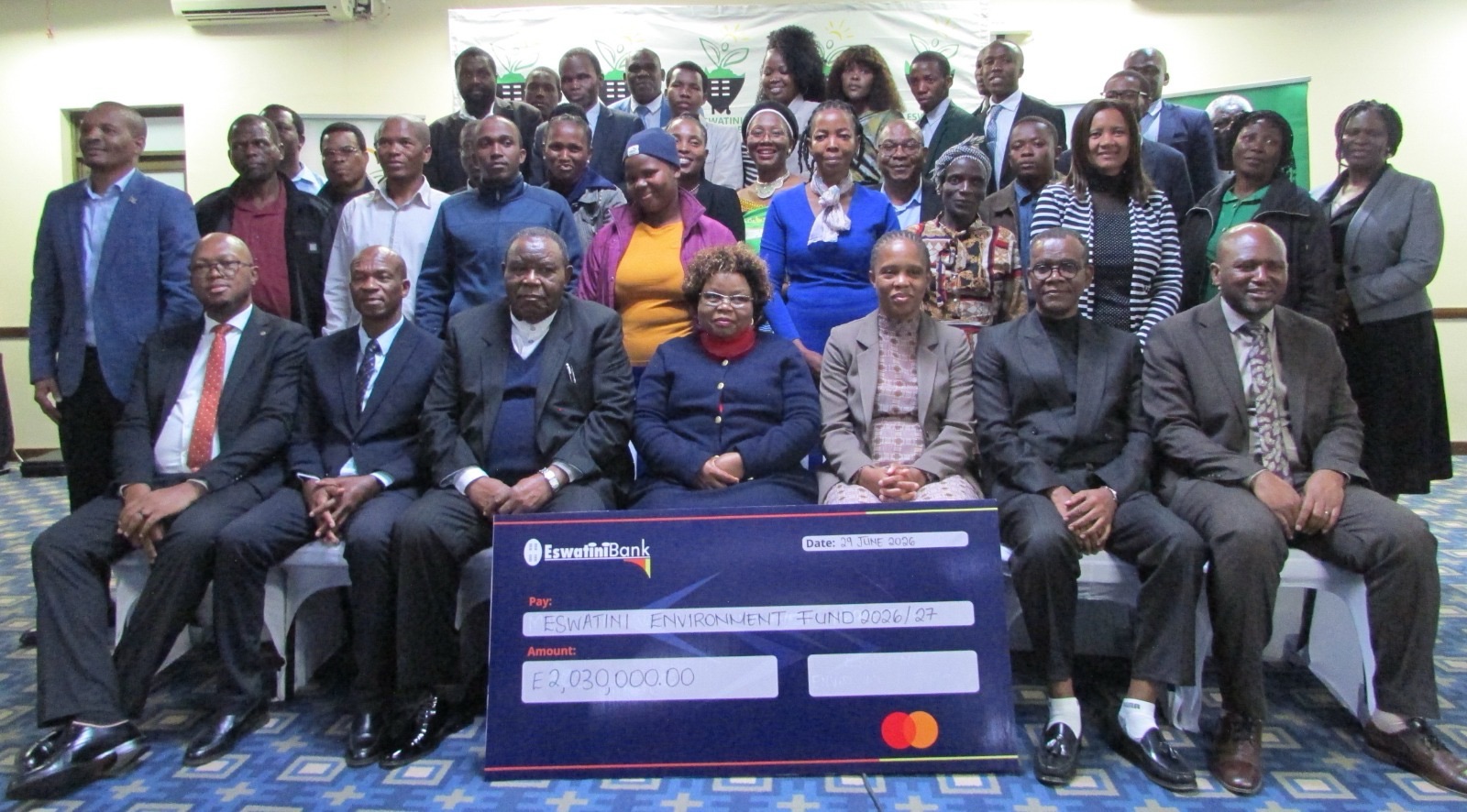
MANZINI – The Eswatini Environment Fund (EEF) has awarded E2.03 million to eight community-led environmental projects during its 2026/27 Grants Award Ceremony held at The George Hotel in Manzini.
The projects, drawn from all four regions of the Kingdom, focus on wetland conservation, land rehabilitation, waste management, water security, climate-smart agriculture and indigenous plant conservation.
Speaking at the ceremony, the Minister of Tourism and Environmental Affairs, Jane Mkhonta-Simelane, said the Fund, established under the Environment Management Act of 2002, continues to translate national environmental commitments into practical community action.

She said the EEF is helping Eswatini meet its obligations under the three Rio Conventions on climate change, biodiversity and desertification.
“The Eswatini Environment Fund has… become a key instrument through which the Government of the Kingdom of Eswatini honours that commitment. It channels government intent into community action, thereby turning national policy into local practice,” she said.
The Minister revealed that this year’s funding call attracted 186 applications, compared to 205 in the previous cycle, highlighting continued demand for environmental funding. She encouraged unsuccessful applicants to strengthen their proposals for future funding opportunities.
With this latest round of grants, the Fund has now supported 90 community projects, disbursing more than E12 million since its establishment.
Among the successful projects is the Madvohane Wetland Management Project at Endlinilembi Royal Residence under Gebeni Constituency, which received E300,000 to restore and protect wetlands while benefiting 102 homesteads.
Mlindazwe High School under Mhlambanyatsi Constituency was awarded E180,000 to install rainwater harvesting infrastructure that will irrigate a school garden and strengthen its feeding programme for 177 learners.

The youth-owned Dream Home Investment (DHI) Waste Management Project received E300,000 to purchase a mini-lorry that will expand waste collection services for approximately 3,000 households in Mpolonjeni and Nkoyoyo while creating opportunities for its team of 11 young entrepreneurs.
In Lubombo, JEREMPAUL Vuvulane Food Market secured E300,000 for its Landfill Reduction Project, which promotes chemical container recycling, green construction practices and wetland conservation benefiting more than 300 farmers.

Land rehabilitation projects also received funding. Lomfa Royal Kraal in Shiselweni was awarded E250,000 for the Mphunyuka Donga Rehabilitation Project, while Mdumezulu Royal Kraal in Lubombo received E100,000 for the Manjolo Donga Rehabilitation Project.
The KaLiba Royal Kraal also received the maximum E300,000 to implement a wetlands management project combining wetland restoration, alien invasive species removal and erosion control.
Meanwhile, the University of Eswatini was awarded E300,000 for a conservation project centred on Warburgia salutaris (Sibhaha). The initiative will establish nurseries, develop sustainable harvesting methods and train communities while promoting the conservation of one of Eswatini’s most valued indigenous medicinal plants.
Mkhonta-Simelane praised several projects for their innovation, particularly the youth-led DHI Waste Management Project, Mlindazwe High School’s integration of environmental sustainability with food security, and the University of Eswatini’s Sibhaha conservation initiative, noting the plant’s cultural significance and widespread use during the COVID-19 pandemic.

While congratulating the beneficiaries, the Minister stressed that all grant recipients would be held accountable for ensuring funds are used solely for approved activities and completed within agreed timelines.
She also announced plans to review the current E300,000 grant ceiling, increase the Fund’s annual allocation beyond E2 million, and transform the National Environment Fund into a “Mega Fund” capable of attracting financing from Government, the private sector and international climate partners.
Closing the ceremony, the Minister urged the private sector to invest in environmental conservation and community resilience, describing the grants as investments in Eswatini’s sustainable future rather than simply financial assistance.