11

By Tlalane Dlamini
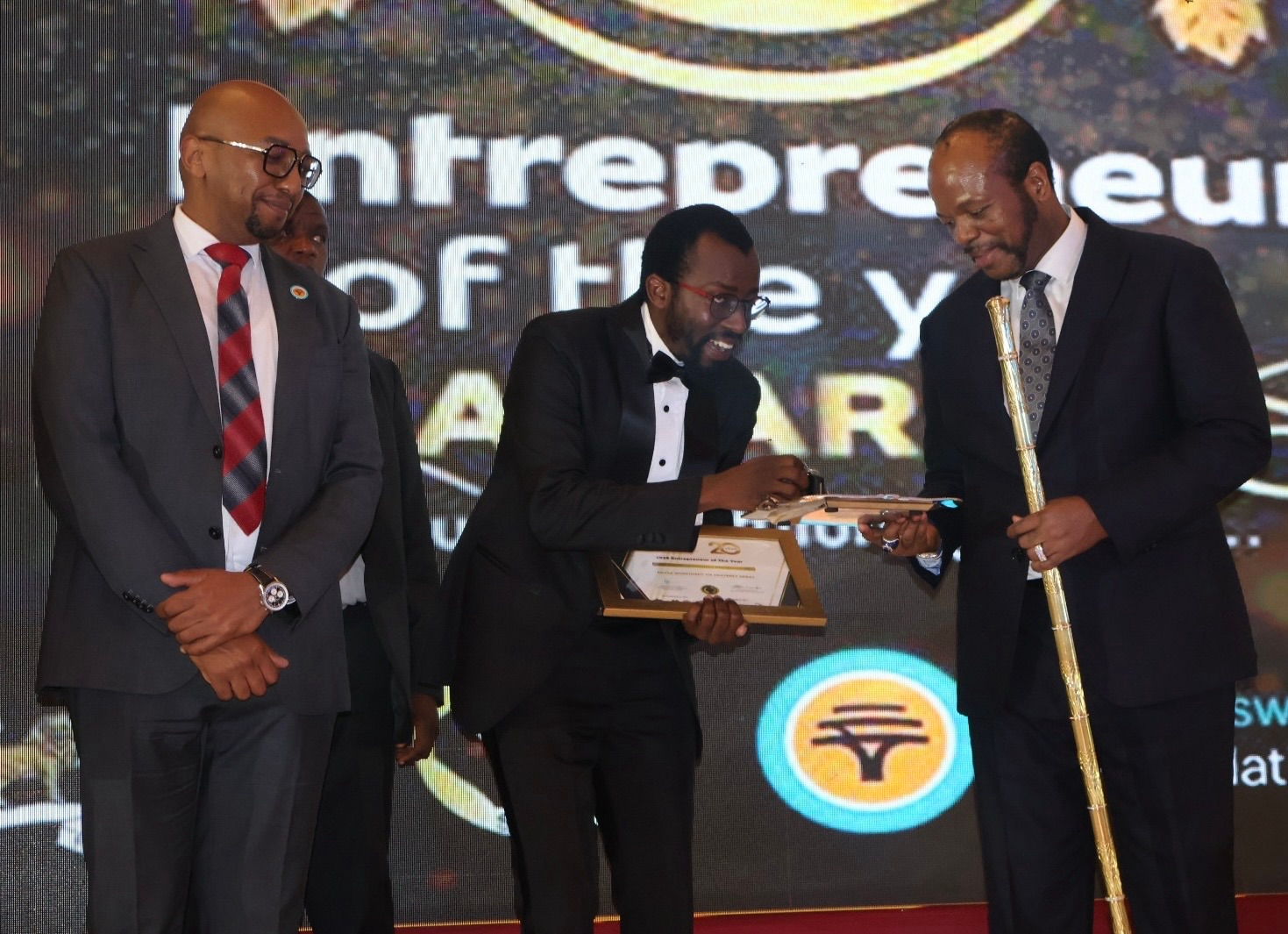
Notsa Eswatini has claimed the country’s top entrepreneurial honour, with founder Wandile Dlamini crowned the 2026 Entrepreneur of the Year and awarded a brand-new single-cab Toyota Hilux valued at more than E500 000. The victory highlights the growing potential of Eswatini’s cultural heritage as a driver of enterprise, tourism and economic growth.
Dlamini received the accolade during the Entrepreneur of the Year Awards (EYA) ceremony held at Ezulwini Palazzo on October 21, 2026. He becomes the 20th overall winner since the awards were established. The prestigious event was graced by His Majesty King Mswati III, who delivered the keynote address.

Based in Matsapha, Notsa Eswatini was recognised for its textile manufacturing operations, resilience, ethical business practices and integrity, demonstrating how locally rooted businesses can build commercial success around the country’s cultural identity.
Eswatini’s cultural calendar, including the Umhlanga Reed Dance, Incwala and Buganu ceremonies, showcases the Kingdom’s distinctive traditions, attire, music and craftsmanship. These cultural expressions also present opportunities for businesses to develop products and services that connect visitors with authentic Swati experiences.
Notsa Eswatini has positioned itself within this space by producing traditional Swati attire and fabrics on a commercial scale, illustrating how cultural heritage can be translated into a sustainable business.
For cultural tourism, this creates opportunities to extend visitor spending beyond accommodation, attractions and transport to include locally manufactured clothing, textiles, crafts and other cultural products. With the right distribution channels and partnerships, such enterprises can strengthen links between tourism, manufacturing and the creative economy.
While the award does not quantify the size of this market, Notsa’s achievement provides an example of how businesses can build on Eswatini’s cultural distinctiveness to create economic value.
Notsa’s work has extended to some of the country’s significant national and international engagements. The company produced Sidvwashi and Umhelwano fabrics for celebrations marking His Majesty King Mswati III’s 40 years on the throne. It also produced Umhelwano attire for a gathering at the International Convention Centre attended by 120 Heads of State.

According to Dlamini, the company’s clients include banks, Eswatini Air, Hlane Royal National Park, the Parliament of Eswatini and, most recently, the Embassy of Taiwan.
These relationships demonstrate the potential for locally manufactured cultural products to serve institutional and corporate markets, creating opportunities for larger orders, repeat business and stronger brand recognition.
The company’s links with tourism establishments also point to opportunities for locally made products to reach visitors through retail outlets, hospitality businesses and other tourism-related distribution channels, subject to the relevant commercial arrangements.
However, sustaining this growth will require consistent product quality, competitive pricing, reliable delivery and expanded market access. Collaboration among manufacturers, tourism operators, retailers and cultural institutions could further strengthen the commercial reach of Eswatini’s cultural products.
Beyond the overall winner, the 2026 EYA recognised entrepreneurs operating across agriculture, technology, property, healthcare, handicrafts and other sectors. Each category winner received E45 000.
The category winners were:
Master Art Works also demonstrated the commercial potential of environmentally conscious craftsmanship, with its natural, biodegradable products already sold through tourist hotels and lodges.
As Notsa Eswatini joins the ranks of the Entrepreneur of the Year Awards’ overall winners, its achievement reinforces a broader message: cultural heritage can be more than a source of national pride. With innovation, investment and strategic partnerships, it can also provide a foundation for local manufacturing, tourism-linked enterprise, job creation and sustainable economic growth.