11
11
By Tlalane Dlamini
The United Kingdom made its long-awaited debut at the Eswatini International Trade Fair (EITF) on September 1, 2026, hosting a dedicated UK-Eswatini Business Seminar aimed at helping local exporters understand how to unlock the British market under a duty-free trade agreement that many businesses have yet to fully utilise.
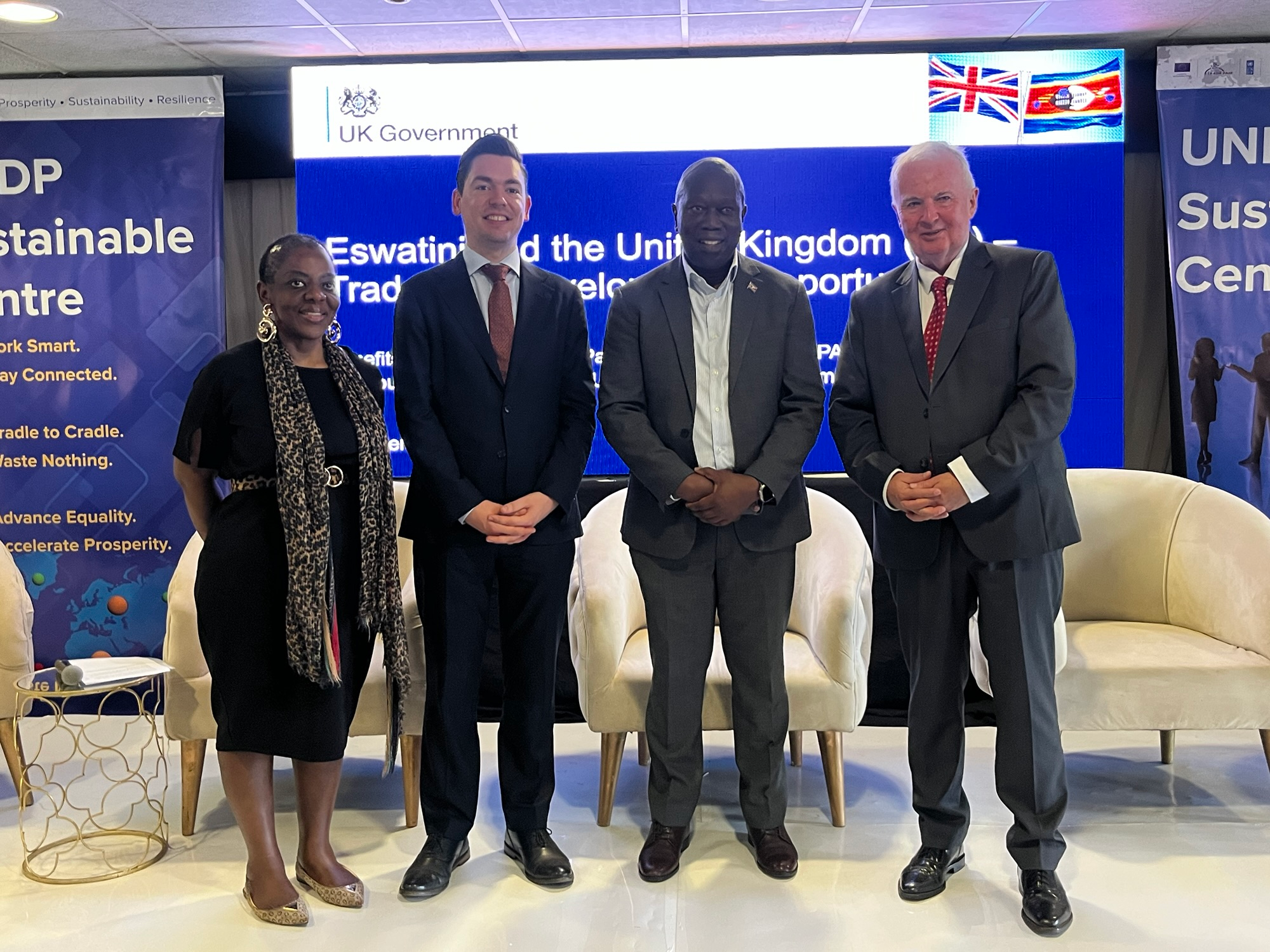
The seminar, delivered in partnership with the British High Commission, brought together government officials, trade specialists and private-sector representatives to unpack the Southern Africa Customs Union and Mozambique-United Kingdom Economic Partnership Agreement (SACUM-UK EPA).

The agreement provides Eswatini goods with permanent duty-free, quota-free access to the United Kingdom market.
A Promise Fulfilled
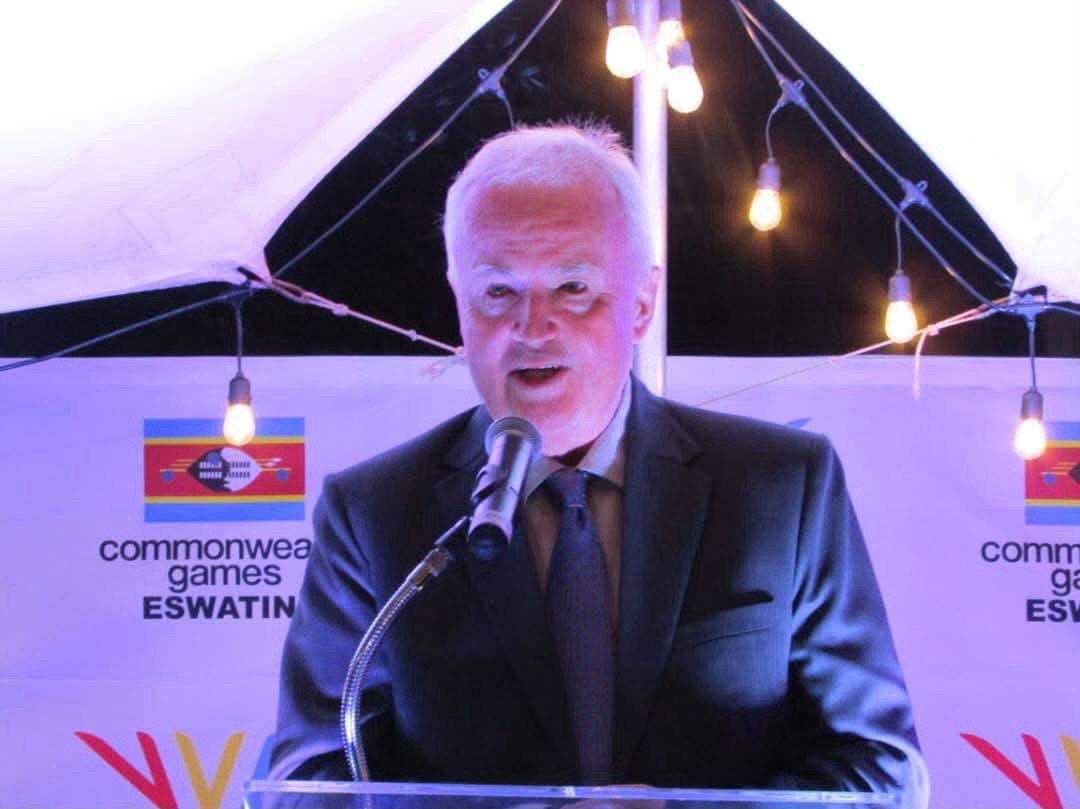
Opening the event, the British High Commissioner recalled a pledge he made nearly 18 months earlier, when presenting his credentials to His Majesty King Mswati III, promising to bring the United Kingdom to the Trade Fair during his tenure.
He thanked the Ministry of Commerce, Industry and Trade, the Eswatini Investment Promotion Agency, Business Eswatini, UNDP and the British High Commission team for making the seminar possible.

A Personal Homecoming
Among the day’s speakers was Chalemera, Director for British Trade and Investment in Southern Africa within the UK’s Department for Business, Innovation, Science and Trade (BIST).

For Chalemera, the visit carried personal significance. Having spent seven formative years at Waterford Kamhlaba, she described her return to Eswatini as “a homecoming of sorts.”
Chalemera outlined BIST’s strategic priorities, which include growing trade and investment, supporting business growth and exports, commercialising science and technology, and building resilient international partnerships.
She identified several sectors with potential for deeper UK-Eswatini collaboration, including agribusiness and agro-processing, manufacturing, renewable energy and climate-smart infrastructure, digital innovation and the creative industries.
She also highlighted the SACUM-UK EPA as a success story, noting that it preserved Eswatini’s preferential access to the UK market following Britain’s exit from the European Union. The agreement ensured continuity for exporters and investors at a time when trade arrangements could otherwise have faced significant disruption.
Growing British Investment
Speaking on behalf of Minister Khumalo, Principal Secretary Ambassador Melusi Masuku said British investment in Eswatini had increased by 50%, with UK foreign direct investment stock reaching approximately E396 million (£18 million) at the end of 2024, according to the Ministry of Commerce, Industry and Trade.

Masuku said the growth demonstrated continued confidence in Eswatini as a destination for business and investment.
The United Kingdom remains one of Eswatini’s important economic partners, providing a market for local exports while also bringing investment, expertise, technology and high-value services into the country.
Khumalo highlighted the SACUM-UK EPA as an important foundation for trade between Eswatini and the UK. The agreement provides businesses with continuity and preferential market access following the United Kingdom’s departure from the European Union. This has helped maintain existing trade flows while giving businesses greater certainty when making investment and expansion decisions.
For Eswatini, the EPA presents an opportunity to grow exports by expanding production in sectors with potential in the British market. These include agriculture, agro-processing, manufacturing and consumer goods.

The Minister noted that increased exports could have wider economic benefits by enabling businesses to expand operations, create employment and improve livelihoods. Beyond existing areas of trade, Eswatini is looking to deepen cooperation with the UK in agribusiness, renewable energy, digital services, textiles and apparel, creative and cultural industries, financial services and skills development.
These sectors could also provide opportunities for entrepreneurs and micro, small and medium-sized enterprises to enter international value chains and access new markets.

The government is meanwhile working to improve the business environment, strengthen competitiveness, support industrialisation and develop value chains as it seeks to attract more foreign investment. Eswatini’s economic outlook also provides a basis for increased investment and trade activity, with the International Monetary Fund projecting 4% economic growth in 2026.
Khumalo said the long-term objective was to build a modern, inclusive and resilient trading relationship with the UK, ensuring that increased economic cooperation translated into opportunities for businesses, workers and communities.
The government sees stronger UK trade and investment ties as a route towards expanding commercial activity, creating quality jobs and contributing to economic growth and shared prosperity.
The Numbers Behind the Opportunity
David Machin, the UK’s Head of Trade Policy for Southern Africa, shared a detailed look at how the agreement is performing in practice.

Presentation data shared at the seminar showed that between 2022 and 2025, UK goods imports from Eswatini averaged £9.3 million per year, with raw cane sugar accounting for more than 71% of Eswatini’s exports to the UK. These exports entered the UK tariff-free under the EPA.
Since 2022, a cumulative £96 million worth of goods imported from Eswatini have used the agreement to enter the UK duty-free, out of £98 million worth of eligible goods.
Machin also highlighted untapped opportunities. In the 12 months to June 2026, approximately £320,000 worth of eligible goods, including women’s cotton aprons, industrial valves and confectionery, did not claim the preferential tariffs available under the agreement.
He explained that this was often linked to goods being routed to the UK through third countries rather than being shipped directly from Eswatini.
To demonstrate what is possible, the seminar featured the case of Moedi Wines, a female-owned Southern African wine venture that has successfully used the EPA to export premium wines to the UK.

Its products include Chenin Blanc, Shiraz, Rosé and Black Bee MCC, with the company also accessing markets in the Netherlands, Denmark and Germany.
Cutting the Red Tape
Delegates were taken through the practical steps required to make use of the agreement. These included checking applicable duties, understanding rules of origin, meeting UK standards and regulatory requirements, and submitting the correct proof-of-origin documentation.
Businesses can use either a EUR.1 Certificate or an invoice declaration to claim preferential treatment at the UK border.
Organisers also directed businesses to additional support platforms, including the UK’s Growth Gateway digital platform, His Majesty’s Revenue and Customs online trade assistant, and Trade Forward Southern Africa’s free e-learning courses covering export readiness, international marketing and customs procedures.

For Eswatini businesses looking to expand beyond the domestic market, the message from the seminar was clear: the UK market is open, and the opportunity now lies in understanding the agreement and making full use of it.