11
11
By: Nonophile Khumalo
EZULWINI — Eswatini is turning its traditional vegetables into a new opportunity to celebrate the Kingdom’s authentic flavours, support local farmers and strengthen its growing food tourism offering.
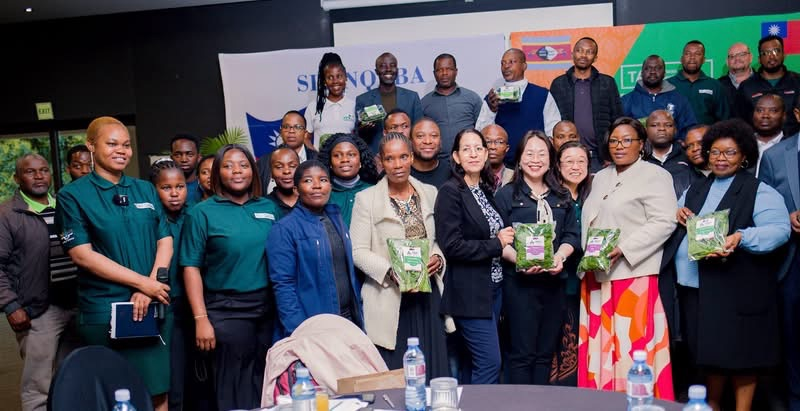
The Traditional African Vegetables (TAV) Retail Market and Consumer Promotion Activities were officially launched on 18 September at the Happy Valley Hotel, marking a significant step towards bringing indigenous vegetables into mainstream retail and introducing them to a wider consumer market.
The initiative focuses on three traditional crops, imbuya (amaranth), umbhidvo wetintsanga (pumpkin leaves) and mandvwandvwe (okra). It forms part of the Taiwan Africa Vegetable Initiative (TAVI) Phase II, supported by the Government of the Republic of China (Taiwan) and implemented by the World Vegetable Center (WorldVeg) in collaboration with Eswatini’s Ministry of Agriculture.
Nikiwe Dlamini, representing Minister of Agriculture Mandla Tshawuka, said the initiative goes beyond simply placing traditional vegetables on supermarket shelves. She said it seeks to transform locally adapted crops from household staples into commercially viable commodities capable of generating income for farmers while contributing to the country’s food and nutrition security.

She emphasised that a sustainable value chain requires farmers to produce commercially, retailers to stock the products and consumers to recognise their nutritional and culinary value. She further noted that the ten promotional activities planned under the initiative should be regarded “as a starting point rather than an end point.”
Representing the Embassy of the Republic of China (Taiwan), Sofia Cheng described the launch as the culmination of nearly six years of TAVI implementation in Eswatini, building on almost 60 years of diplomatic relations between the two countries.
She said the programme had evolved from an initiative primarily focused on food and nutrition security into a broader commercial undertaking. This has included training in commercial vegetable and seed production, the establishment of a Multi Stakeholder Platform connecting key players across the value chain, as well as engagement with the hospitality industry.
The packaged traditional vegetables are currently available at ten retail outlets across the country. These include Super Spar outlets in Manzini, Mbabane, Matsapha and Nhlangano; Boxer Stores in Manzini, Mbabane, Piggs Peak and Siteki; Thubelihle Fruit & Veg in Nhlangano; and Savemor in Mpaka.
Consumers purchasing the packaged vegetables are also provided with recipe leaflets, encouraging households to explore different ways of preparing the produce while retaining its traditional appeal.
WorldVeg Country Representative for Eswatini, Dr Fekadu Fufa Dinssa, highlighted the nutritional value of the vegetables, noting that they are rich in essential micronutrients including iron, calcium, zinc, vitamin C, folate and carotenoids.

He also pointed to their resilience in the face of climate related challenges, making them important crops for strengthening sustainable food systems.
Dr Dinssa described the launch as “the beginning of a collective journey” towards strengthening the retail market for traditional vegetables while celebrating Africa’s rich vegetable heritage. He also acknowledged the continued support of the Ministry of Agriculture and the Government of Taiwan since the project’s inception.
The launch provided guests with an opportunity to experience the vegetables beyond their traditional form, with a display of prepared dishes demonstrating how indigenous produce can be incorporated into appealing and nutritious meals.
The spread included imbuya, umbhidvo wetintsanga, spinach and mandvwandvwe, showcasing the variety of flavours and culinary possibilities offered by locally grown produce.
For Eswatini’s tourism sector, the initiative presents another opportunity to place local food at the centre of the visitor experience.
Food provides travellers with an authentic and personal way of connecting with a destination’s culture. As traditional vegetables increasingly find their way from household kitchens into restaurants, hotels and other hospitality establishments, they have the potential to become part of Eswatini’s distinctive culinary identity.
The initiative therefore brings together agriculture, culture, food and tourism, positioning traditional vegetables not only as a source of nutrition and livelihood for local communities, but also as a way of telling the story of Eswatini through taste.
For visitors seeking an authentic experience of the Kingdom, the humble traditional vegetable could become one of the most memorable tastes of Eswatini.