
 11

BY SIPHESIHLE NKAMBULE
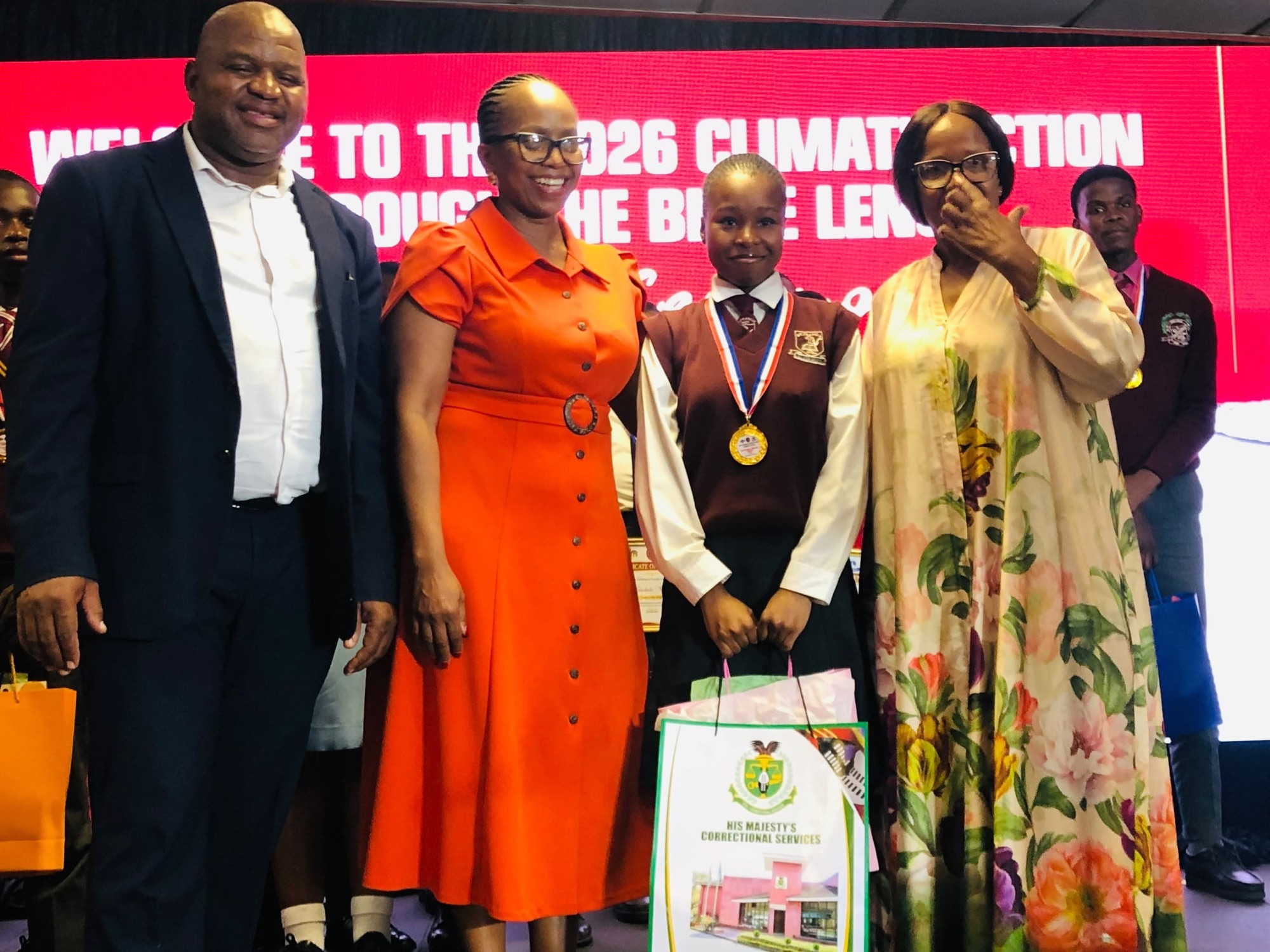
MAHLANYA – A 16 year old learner from St Francis High School, Motsa Usiphe, has emerged as the 2026 overall winner of the Bible Society of Eswatini’s Climate Action Through the Bible Lens Project, earning an educational trip to Taiwan, as faith, academic excellence and environmental responsibility took centre stage during the organisation’s fourth awards ceremony held at the Bible Society Hall in Mahlanya on Friday.

The ceremony brought together learners from primary and secondary schools across the country, with the top 20 academic performers who attained marks of 70% and above also receiving recognition for their outstanding achievements.
Usiphe’s victory was among the highlights of the occasion, particularly as the young achiever prepares to travel to Taiwan to visit the Taiwan Bible Society, following her outstanding performance across the primary and secondary school categories.
In her appreciation remarks, the 16 year old acknowledged her fellow learners, parents, twin sister and Religious Education teacher, whom she credited for keeping her motivated even during moments when she considered giving up. She also took a moment to appreciate herself for remaining determined throughout her journey.
FAITH MEETS CLIMATE RESPONSIBILITY
The competition, held under the topic ‘Climate Action Through the Bible Lens’, challenged learners to explore environmental protection through biblical teachings, demonstrating how faith can influence attitudes towards safeguarding the environment.
Representing the Ministry of Education and Training, Chief Inspector for Secondary Education Dr Cebsile Nxumalo applauded the learners for their powerful scriptural messages, which she said reminded society of its God given responsibility to care for one another and protect the environment.
“Let me start by appreciating the powerful scriptural message shared by our learners, which reminds us of our God-given responsibility to care for one another,” she said.
She drew a connection between the biblical commandment to love one’s neighbour and environmental protection, explaining that pollution, destruction of forests and misuse of natural resources also affect other people and future generations.

Dr Nxumalo further identified young people, the church and homes as critical partners in raising environmental awareness.
“There are three critical partners in the fight against climate change, which are the young people, those sitting here and those in our schools, the church and our homes. Each of them has a unique role to play in environmental awareness,” she said.
She emphasised that young people should not merely participate in addressing today’s environmental challenges but must be equipped with the knowledge, skills and values to become agents of change in their communities.
The Ministry also linked the initiative to the Competency-Based Education (CBE) curriculum, which promotes practical skills, critical thinking, problem-solving and the application of classroom knowledge to real-life situations.
Dr Nxumalo encouraged schools to translate the learners’ innovative ideas into practical environmental projects, stressing that education should prepare children not only for examinations but also for life and the challenges facing their communities.
INCLUSION TAKES CENTRE STAGE
Beyond the competition and academic recognition, the ceremony also carried a strong message about inclusion, demonstrating that climate action and faith-based education should create opportunities for everyone.
The participation of learners from Matsetsa School for the Deaf was particularly highlighted by Dr Nxumalo, who said environmental responsibility should not be limited by disability, age or other circumstances.
The spirit of inclusion was also reflected through the participation of Sizakele Maziya, a deaf representative of the Bible Society, who used sign language to interpret the biblical account of Abraham’s faith being tested when God asked him to sacrifice his son Isaac, as recorded in Genesis 22:1–18.
Her presentation demonstrated the importance of making biblical teachings accessible to people with different communication needs.
St Joseph’s Mission School also brought a memorable performance to the ceremony, offering another demonstration of how learners with different abilities can participate, express their talents and contribute meaningfully when given opportunities.
Meanwhile, pupils from Kwaluseni Primary School used biblical verses to deliver a compelling message on climate change, blending scripture, creativity and entertainment to engage the audience.
BIBLE SOCIETY COMMENDS PARTNERS

Rev Thandekile Zulu, representing the Bible Society, expressed sincere appreciation to the Ministry of Education and Training for its continued partnership in advancing the organisation’s work.
“We express our sincere appreciation to the Ministry of Education and Training, which has been a great strategic partner. Your support has been an instrument in the work,” she said.
Dr Nxumalo also commended the Bible Society of Eswatini and the Religious Education Association for sustaining the initiative over the years.
She further recognised international partnerships, particularly the Norwegian Bible Society, which hosted the 2024 competition winner, and the Mauritius Bible Society, which hosted the 2025 winner.
As the fourth edition came to a close, the Ministry announced that preparations for the fifth edition are expected to begin as early as February 2027, calling on more schools and Religious Education teachers to mobilise learners for participation.
The ceremony ultimately demonstrated that the responsibility of protecting the environment extends beyond government policies and classroom lessons. Through faith, education, inclusive participation and the voices of young people, climate action can become a shared responsibility that begins within schools, churches and homes


