
 11

By Nonophile Khumalo
MBABANE – Deputy Prime Minister Thulisile Dladla has called for the removal of physical, institutional and social barriers that limit the participation of persons with visual impairments, urging Emaswati to turn disability inclusion into meaningful action.
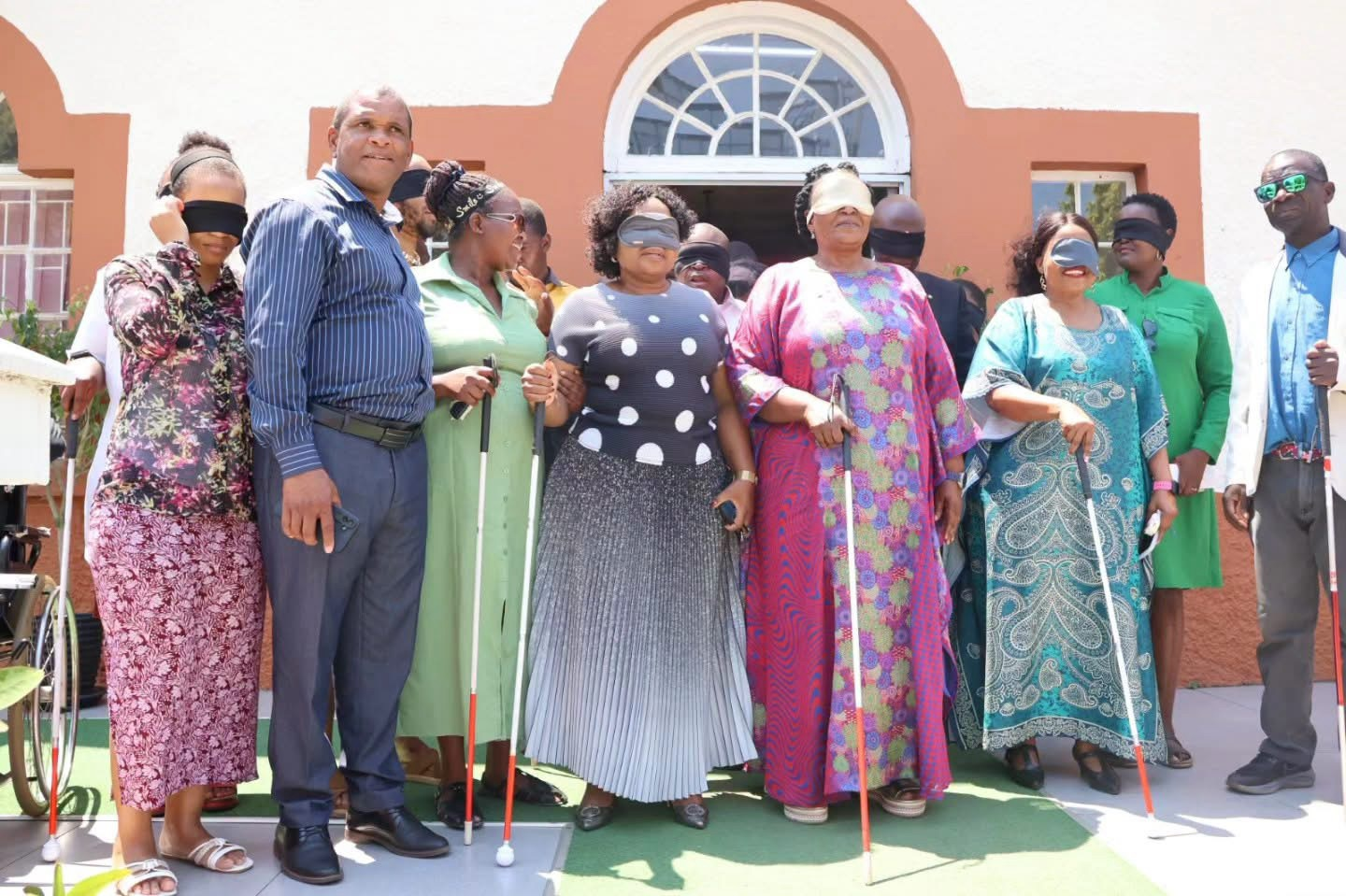
Dladla was speaking during the launch of the 2026 Blindfold Dinner Campaign, held at the Deputy Prime Minister’s Conference Room on Monday, October 19, under the theme “Walk in Our World: Understanding Blindness, Unlocking Abilities, and Advancing Inclusion.”
She emphasised that persons who are blind or have low vision should be recognised for their abilities, contributions and potential rather than defined by their disabilities.
The Deputy Prime Minister challenged Emaswati to confront stereotypes and discriminatory attitudes that continue to restrict access to education, employment, entrepreneurship, public services and leadership opportunities.

She said building an inclusive society requires accessible public buildings, unobstructed pedestrian walkways, responsive public transport systems and information available in accessible formats.
Dladla also urged motorists, businesses, public institutions and communities to respect white cane users, highlighting the white cane’s importance in promoting safe mobility, independence and participation in everyday life.
As part of the 2026 White Cane Day commemoration, she stressed that removing barriers for persons with visual impairments must be treated as both a practical responsibility and a national commitment.
She cautioned that wearing a blindfold temporarily cannot fully replicate the lived experiences of people who are blind or have low vision. Instead, she said, the campaign should foster empathy, deepen public understanding and inspire practical action to address the challenges they face.
Dladla further underscored the importance of involving persons with visual impairments in decisions that affect their lives, including the development of policies, programmes and accessible public spaces.
She noted that Eswatini’s disability inclusion efforts are guided by the Persons with Disabilities Act, 2018, and the United Nations Convention on the Rights of Persons with Disabilities, which promote equality, accessibility and independent living.
Meanwhile, Minister of Tourism and Environmental Affairs Jane Mkhonta-Simelane commended Dladla for her work and called on Emaswati to continue supporting persons who are blind.
The campaign seeks to strengthen public understanding of blindness and encourage collective action towards an inclusive Eswatini where persons with visual impairments can live independently, access equal opportunities and contribute meaningfully to national development.


